
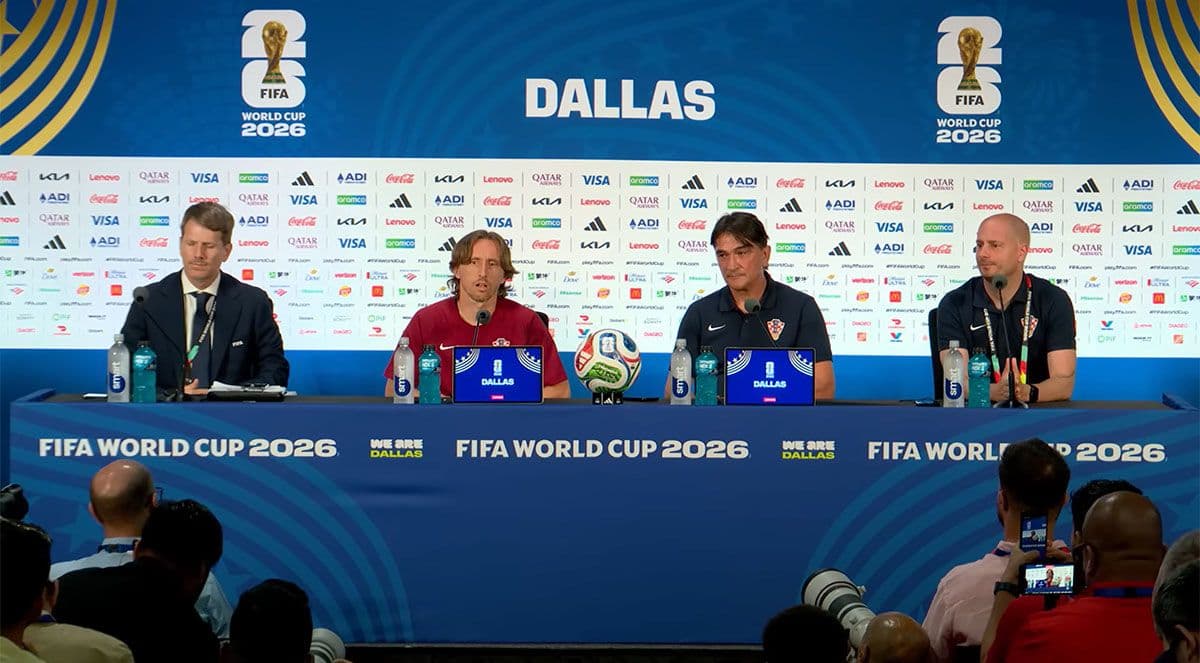
On paper, Portugal enters this Round of 16 clash as the nominal favorite, boasting one of the highest individual talent metrics in the entire tournament. But the mainstream media heavily conflates raw star power with structural efficiency. When you strip away the names and analyze the underlying data, the illusion of Portugal’s dominance completely evaporates, exposing a highly volatile tactical matchup against a tournament-hardened Croatia.
The Portugal Paradox: High Inflation, Low Efficiency
Roberto Martínez’s tactical blueprint continues to suffer from a systemic identity crisis. The narrative surrounding how he manages his legacy assets—namely the Cristiano Ronaldo paradox—is merely a symptom of a deeper, collective malfunction.
The data from the group stage doesn’t lie. When the opportunity arrived to secure their group against Colombia, Portugal was comfortably second-best. More alarmingly, the structural deficiencies that plagued their opening stalemate with DR Congo resurfaced. Despite controlling vast swathes of nominal possession, Martínez’s side completely lacks the tactical mechanism to break down and overwhelm disciplined defensive blocks. They are a collection of elite individuals operating without a cohesive offensive trigger.
The Croatia Formula: Elite Game Management and Tactical Friction
Conversely, Zlatko Dalić’s Croatia is a unit built specifically to exploit precisely this type of unstructured opposition. While their opening defeat to England raised public doubts, their subsequent bounce-back victories over Panama and Ghana revealed the true nature of this squad: Calculated Resilience.
Neither victory was flashy; both decisive match-winners were engineered deep in the second half through deliberate tactical adaptations and superior physical conditioning profiles. This is the exact brand of "grittiness" that has made Croatia one of the most lethal knockout entities in modern international football.
Dalić’s squad possesses an elite game-management index. In single-elimination matrixes, they excel at lowering the tempo, absorbing uncoordinated pressure, and ruthlessly seizing the defining moments of a match—whether in the dying minutes of normal time or via the psychological warfare of a penalty shootout.
The Lab’s Verdict
This fixture is highly unlikely to be an open, high-scoring thriller. Instead, it will be a high-friction tactical chess match decided by fatigue thresholds and structural patience.
Mainstream pundits are expecting Portugal's talent to eventually break through, but the data strongly favors Croatia’s ability to completely neutralize Martínez’s predictable patterns. Expect Croatia to manage the tempo, dictate the half-spaces, and comfortably avoid defeat within the 90-minute regular time framework.
The public is buying the hype. The lab is backing the formulation.